|
-
On October 28, 2026, Professor Robin B. Gasser, Fellow of the Australian Academy of Science (FAA) and Redmond Barry Distinguished Professor at the University of Melbourne, visited Dangkang Gene with his delegation. The founding team and technical leads of Dangkang Gene received the guests warmly, and the two parties held in-depth discussions on the development trends of on-site molecular detection technologies for animal diseases, the industrial application of RPA technology, and international research collaboration.
-
In July 2026, Wuhan Dangkang Gene Technology Co., Ltd. (hereinafter referred to as Dangkang Gene) successfully passed the audit and officially became a member unit of the Wuhan Donghu National Independent Innovation Demonstration Zone Biomedical Industry Association. This membership marks the official integration of the company into the Optics Valley biopharmaceutical industry ecosystem, and the beginning of a new journey of industry university research collaboration and industrial chain resourc
-
Finding specific conserved sequences is the first step in establishing molecular detection methods. Whether this step can be done well directly determines whether your subsequent work is meaningful. But for experts in molecular biology, bioinformatics is often their own weakness. In order to help beginners in bioinformatics solve this problem smoothly, Xiaokang has provided a nanny style tutorial for everyone. 1. Determine the target gene. Generally speaking, bacteria and DNA viruses are more conserved than RNA viruses, and bacteria's metabolism related genes, virus structural protein genes, and polymerase genes are relatively conserved. Some RNA viruses also have relatively conserved 5'UTR and 3'UTR regions. For some pathogenic bacteria, virulence factor genes can also be considered as target genes. If the genome of your target virus is small, you can also consider using the whole genome directly
-
The combination of RPA (recombinant polymerase chain reaction) technology and CRISPR technology is currently a very cutting-edge and popular combination in the field of nucleic acid testing. This technological combination represents the development direction of the new generation of nucleic acid diagnostic tools, with significant advantages such as speed, sensitivity, and portability.
-
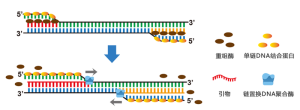
Nucleic acid amplification technology is the core support for molecular diagnosis, life science research, and pathogen detection. Traditional PCR technology has become the industry standard due to its high sensitivity and specificity, but its limitations such as relying on precision thermal cyclers, long detection cycles, and difficulty in rapid on-site testing have limited its application in emergency prevention and control, grassroots screening, field testing, and other scenarios. Recombinase Polymerase Amplification (RPA), as a new generation of isothermal nucleic acid amplification technology, breaks through the scene limitations of traditional amplification techniques with the advantages of constant temperature, low equipment dependence, high sensitivity and specificity, and has become a key technical solution for real-time detection (POCT) and rapid on-site diagnosis.
-
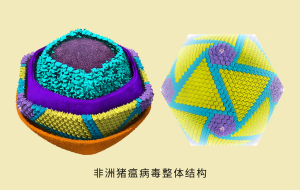
Introduction to Pathogen: The pathogen of African swine fever is African swine fever virus (ASFV), which is the only member of the African swine fever virus family and genus, and is currently the only known vector DNA virus. Virus structure: The virus particles have an icosahedral multilayer structure with a diameter of approximately 250 nm. From the outside to the inside, they are composed of the virus envelope, capsid, bilayer inner membrane, nucleocapsid, and virus genome. Highly pathogenic, it is classified as a Class I animal disease by the Ministry of Agriculture and Rural Affairs of China. The incubation period for natural infection is 4-19 days, and the experimental infection period is 2-5 days. The mortality rate of the most acute/acute type can reach 100%.
|
|